Back-to-Back Victories in SGP Norway for Arne Martin Güettler on Race 3

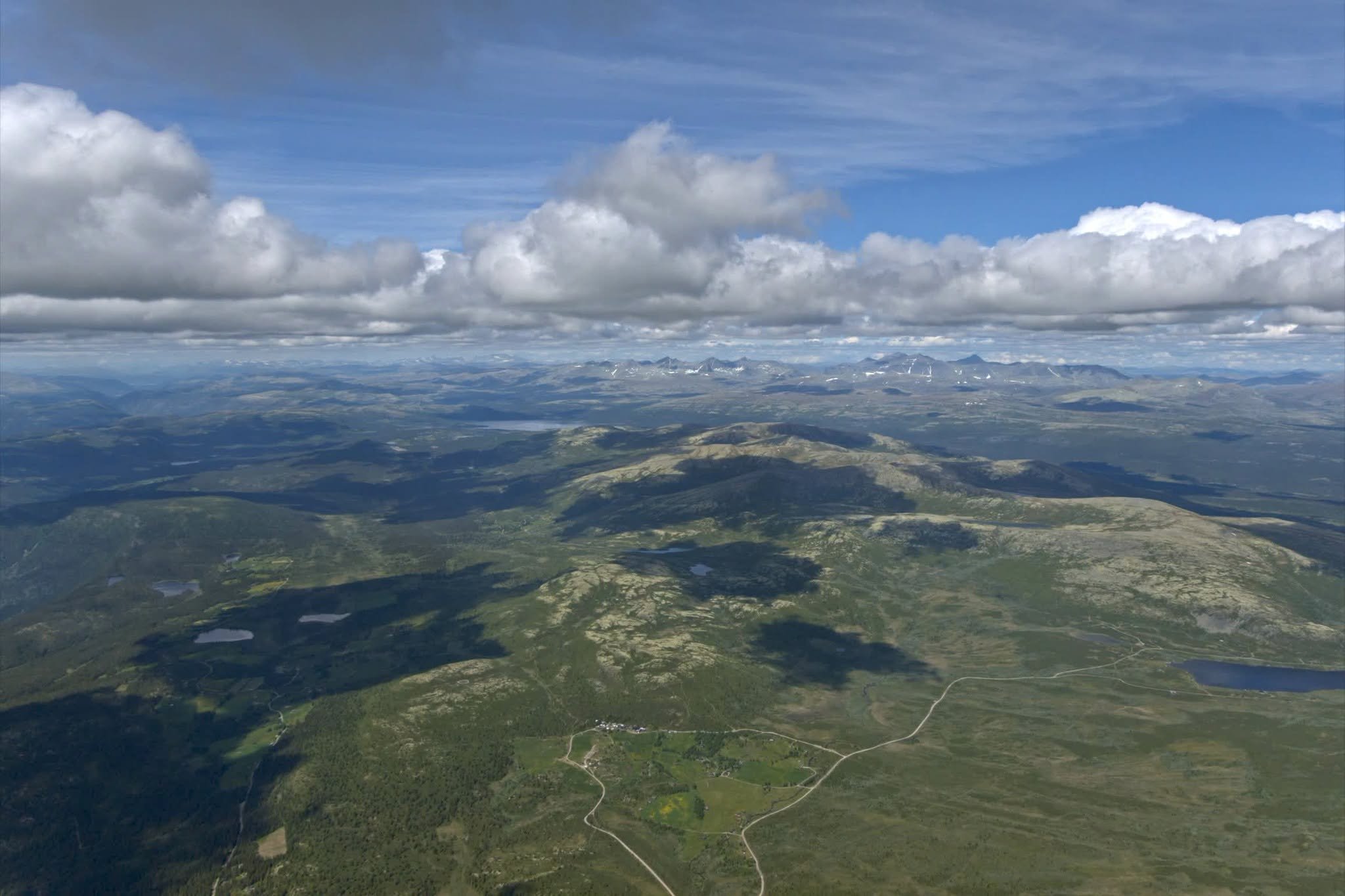
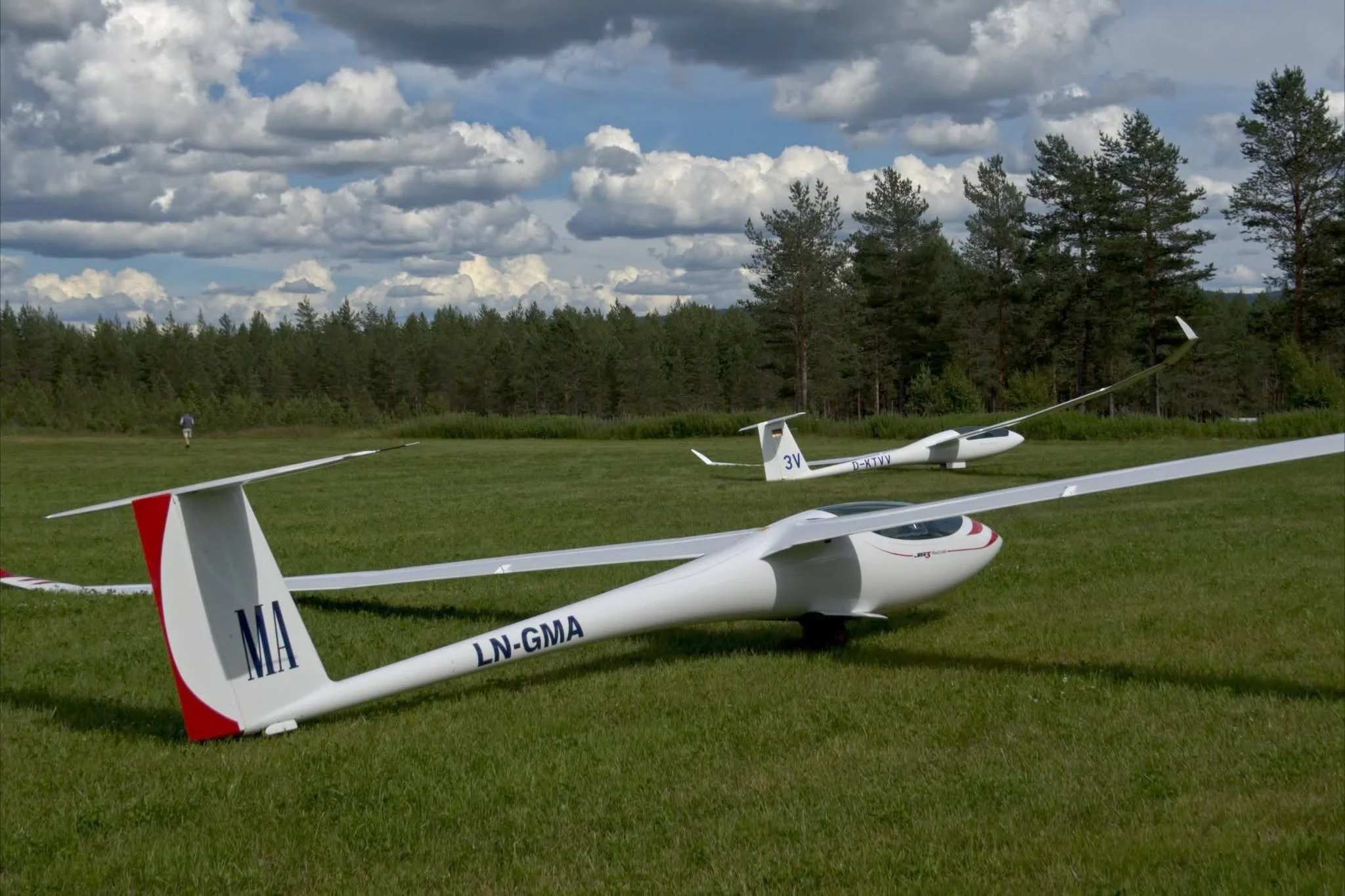
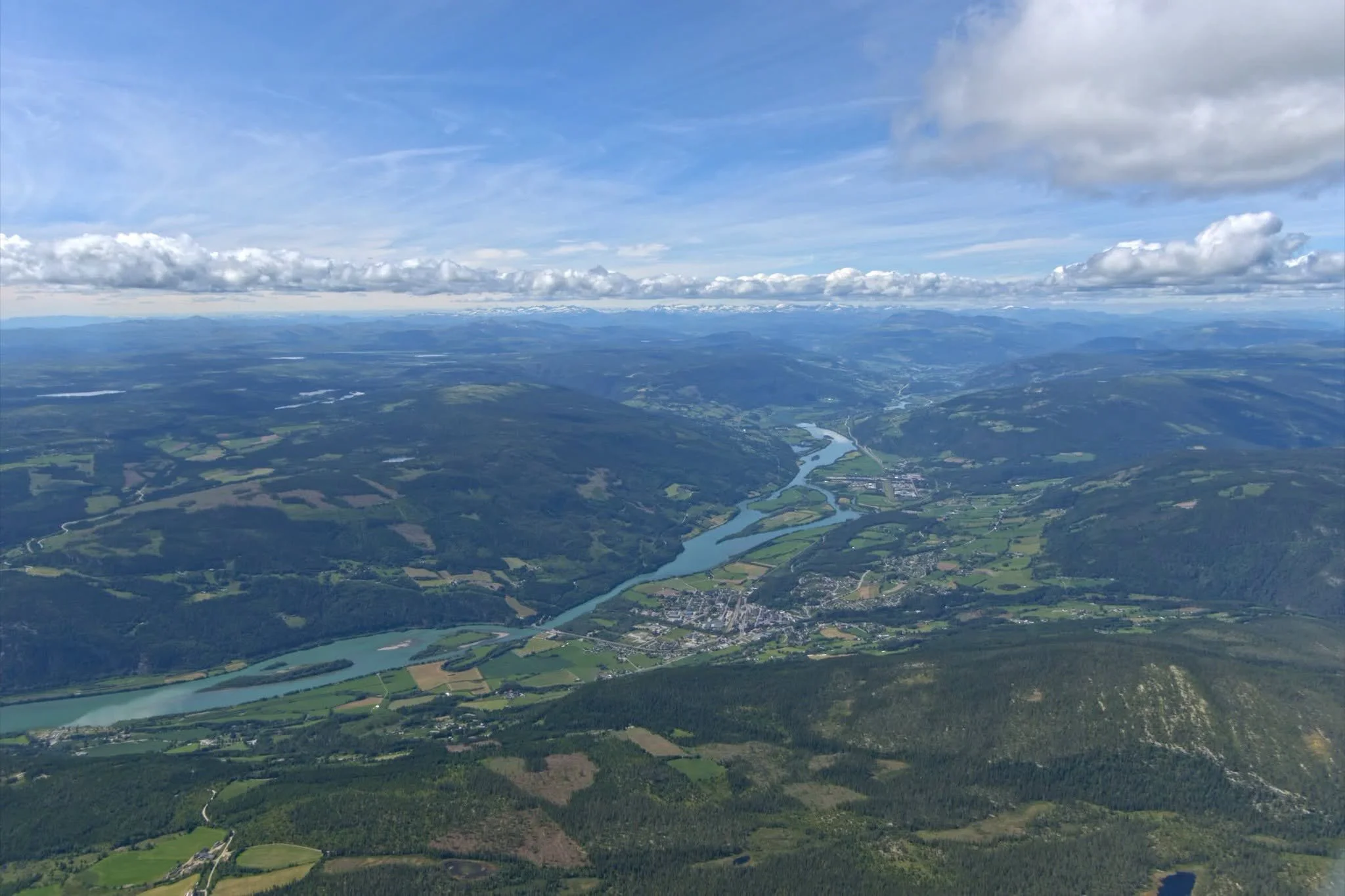
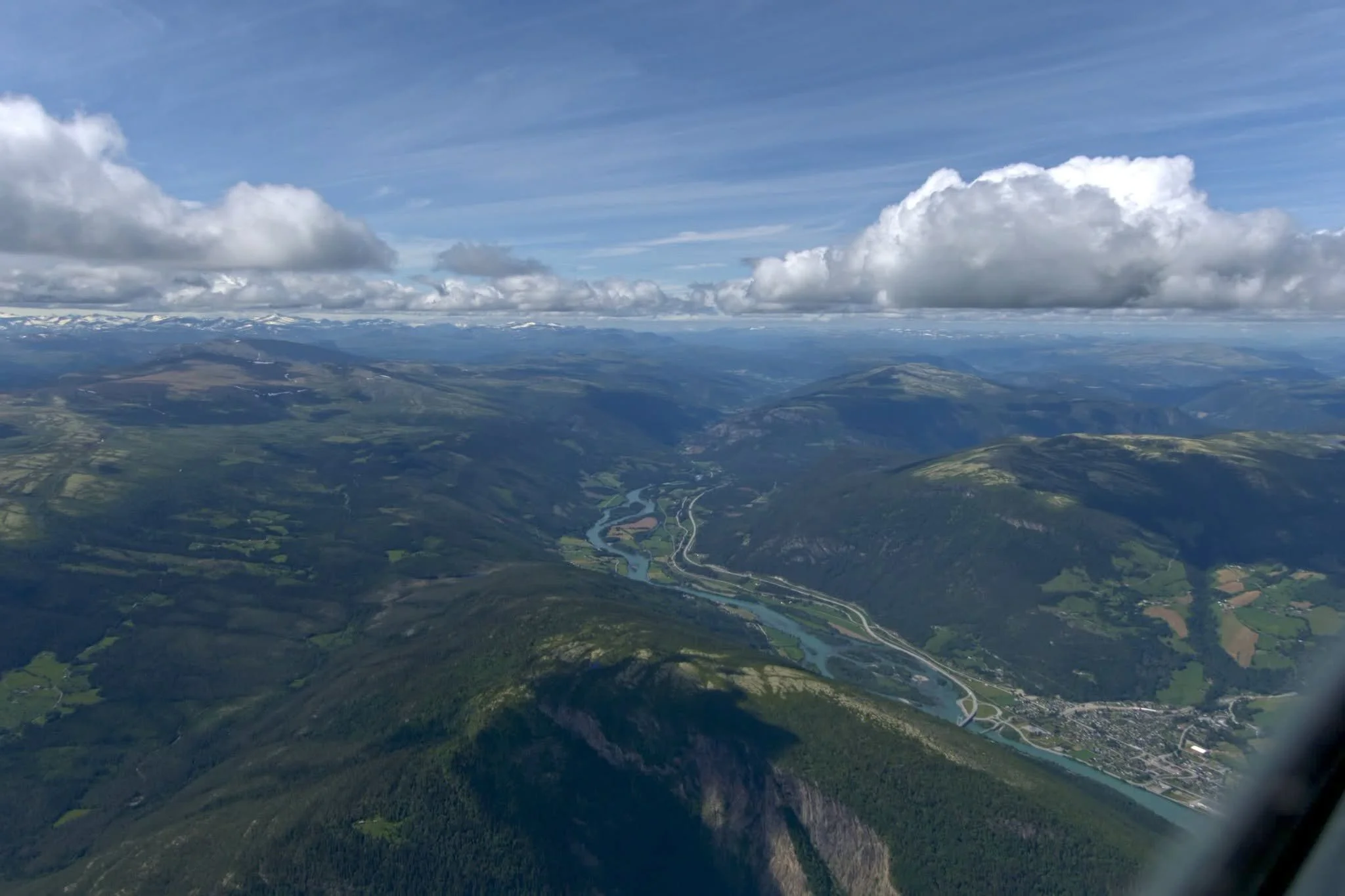
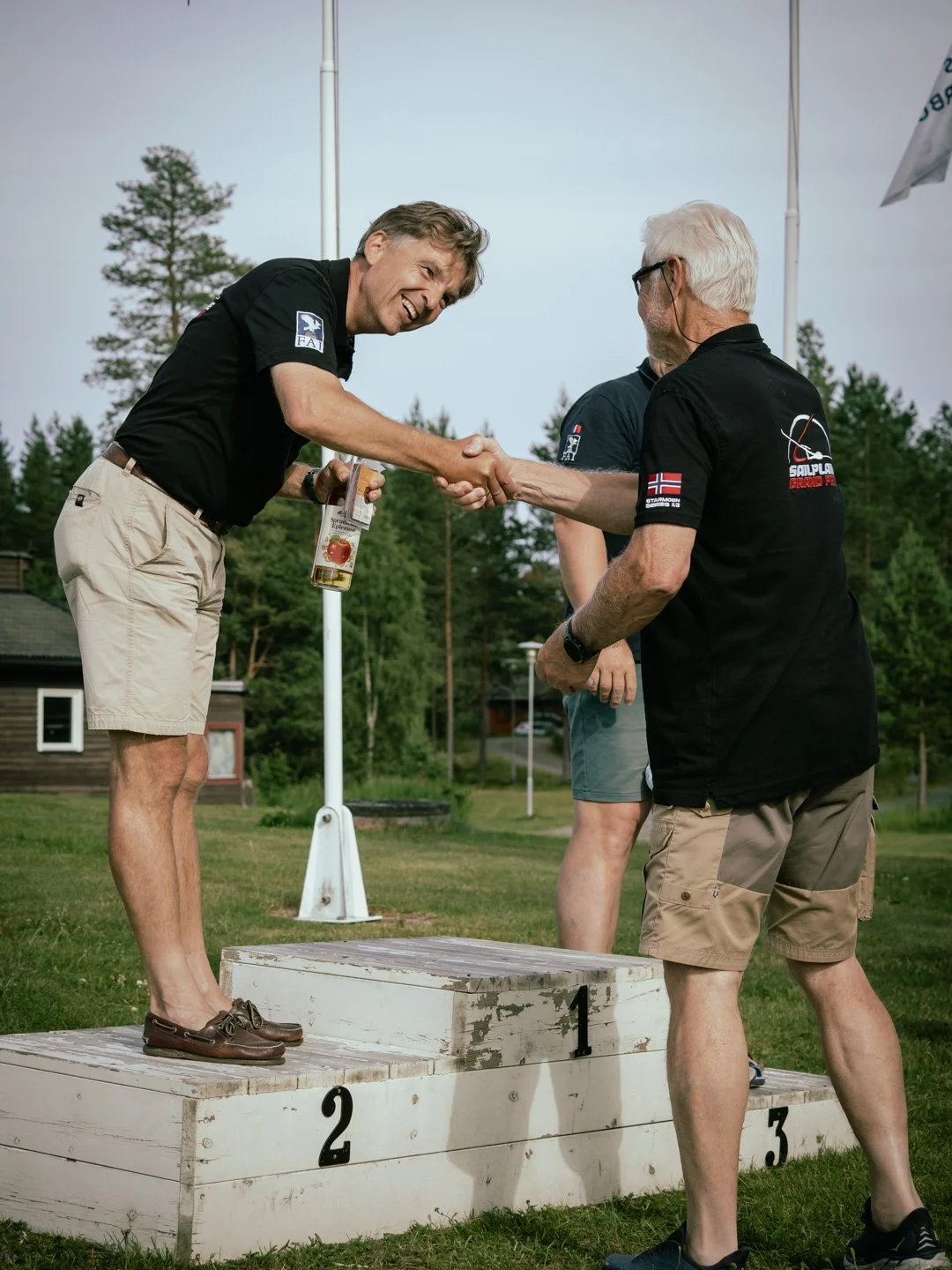
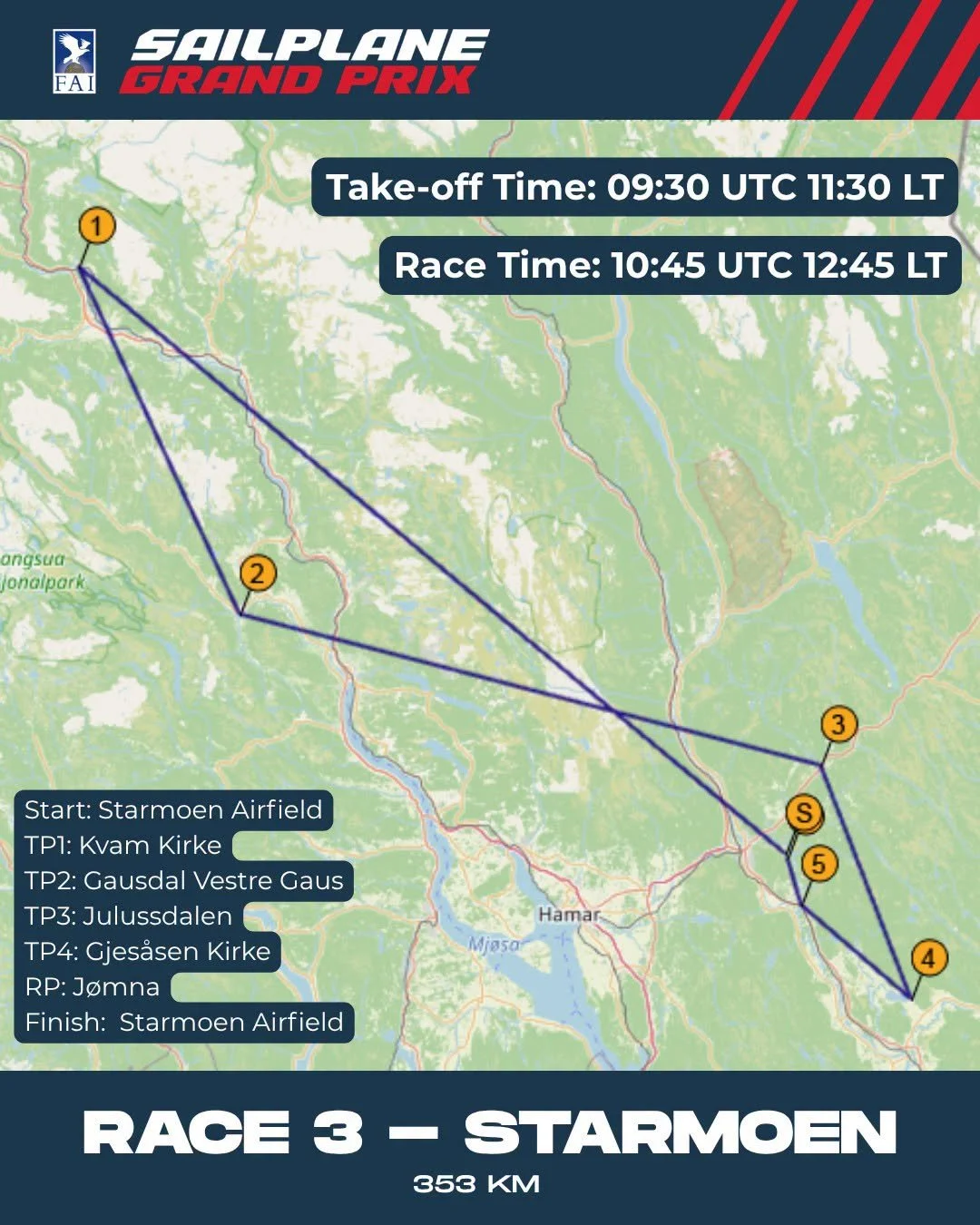
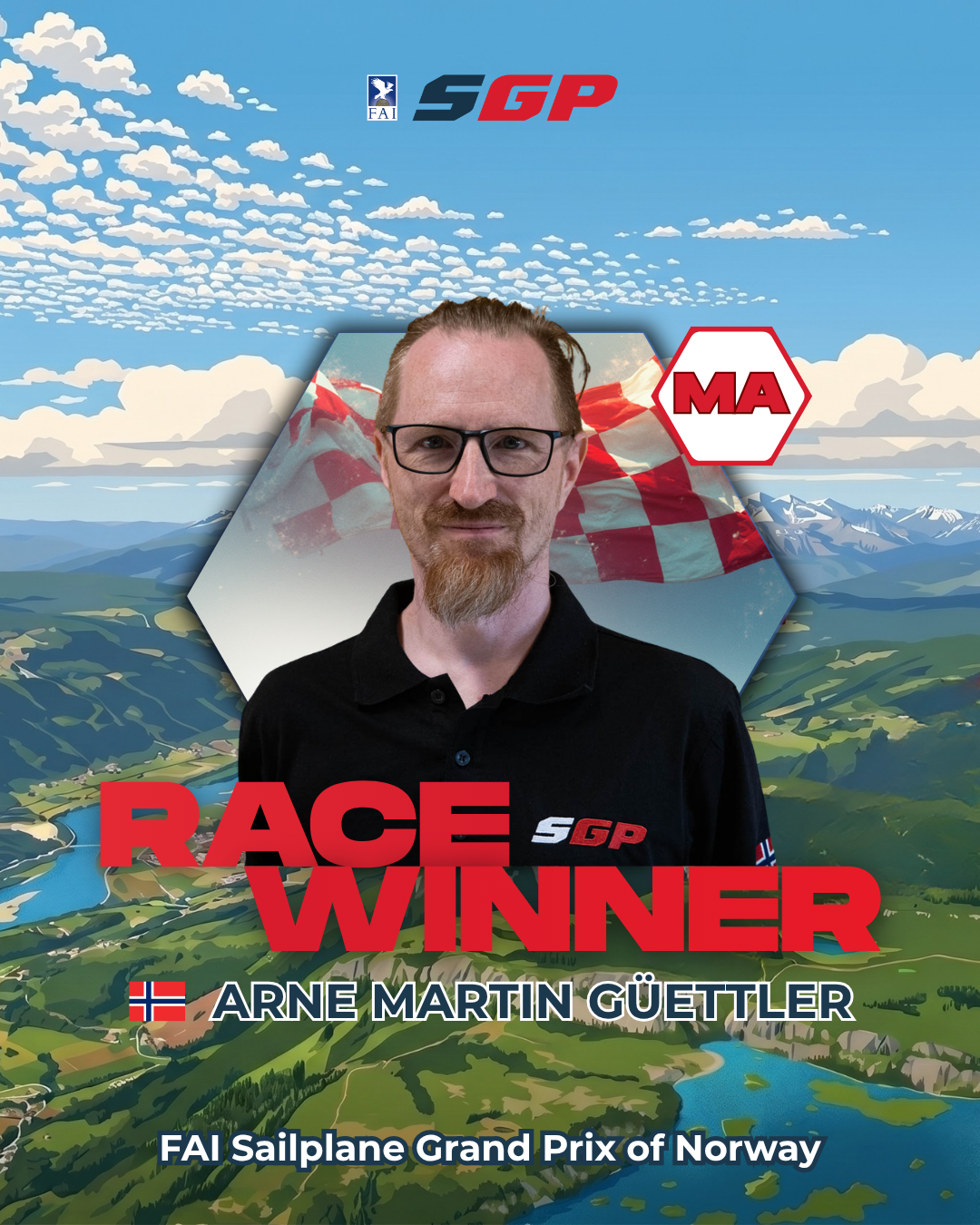
30/06/2026 - Starmoen, Norway - An exceptional day of world-class Grand Prix racing unfolded over Starmoen on June 30, 2026, as pilots took on a massive 353-kilometre task through some of Norway's most rugged and breathtaking mountain territory. Perfect atmospheric conditions finally paved the way for the fleet to race deep into the iconic Gudbrandsdalen Valley, treating pilots to spectacular panoramic views of the Rondane and Jotunheimen National Parks.
Into the Mountains: The Airborne Grid and Weather
The pre-race forecasting via SkySight pointed toward an extraordinary competition day, predicting cloudbases well over 2,600 meters MSL, with experiential estimates hinting at heights exceeding 3,200 meters. Coupled with low winds both at the surface and at altitude, the tactical canvas was set for high-speed mountain soaring.
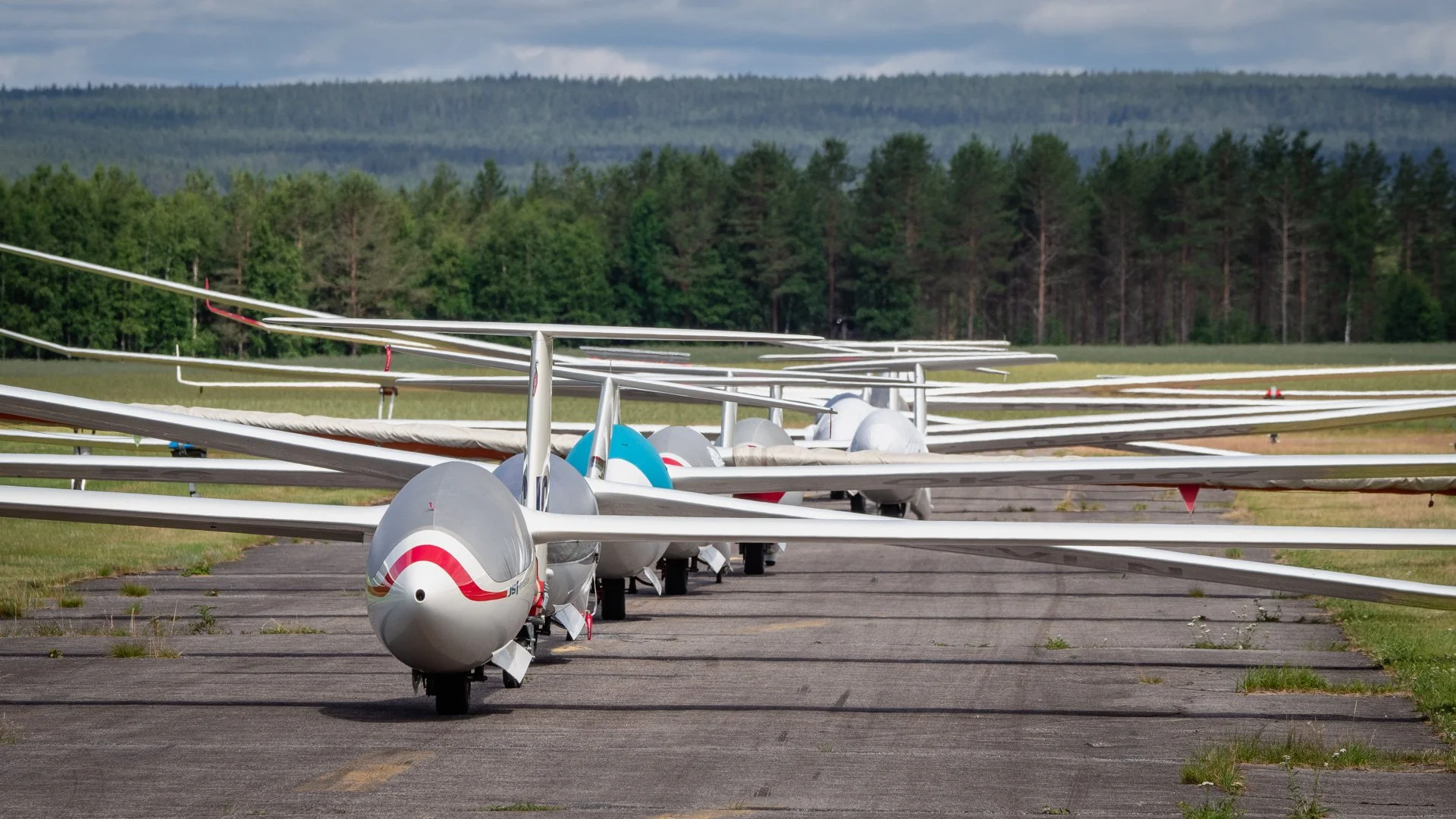
The airborne grid formed efficiently over Elverum as the thirteen-glider fleet jockeyed for energy and position above Starmoen Airfield. The regatta start gate officially opened at 12:50 LT (10:50 UTC), launching the pilots into a complex, high-stakes navigation battle across a mix of flatlands and jagged northern peaks.
The task format required rounding five critical technical waypoints. While the mountain sectors promised high speeds, the weaker central plains demanded good energy management and endurance. Eleven of the thirteen starters successfully completed the course, navigating an airmass that required a fine balance between aggressive cruising and careful thermal management.
Strategic Breakdown: How the Margins Were Won
The nearly three-hour race came down to an incredibly tight finish, with a mere 13 seconds separating the top two pilots. While the opening leg to Kvam Kirke was a tightly packed dead heat, with all finishers arriving within 4.1 km/h of each other, the real sorting happened on the subsequent legs.
The Mid-Course Separation
Legs 2 and 3 opened up substantial speed deltas across the fleet, showing spreads of 37.1 km/h and 32.6 km/h respectively. Arne Martin Güettler, flying his JS3 RES, established an baseline of consistency by posting speeds of 126.3 km/h and 126.1 km/h on these legs.
The real test, however, materialised on Leg 4 along the Julussdalen stretch. This sector became a graveyard for pure cruise momentum, opening up a massive 47.3 km/h chasm between the fastest and slowest gliders. Güettler chose a conservative line, managing a solid 88.8 km/h to preserve his energy and avoid getting low.
The Decisive Final Sprint
Once clear of the difficult central air, the race transformed into a flat-out drag race back to Starmoen across Legs 5 and 6. Güettler hammered home his advantage, executing a brilliant 187.2 km/h run on Leg 5 followed by a blistering 218.8 km/h final sector to claim the day's victory.
Tilo Holighaus (3V, Ventus 3T) pushed Güettler to the absolute limit, finishing just 13 seconds behind. Holighaus actually achieved the highest individual climb rate among the podium finishers at 4.1 m/s and dominated Leg 3 with a field-leading 133.9 km/h. However, his final glide on Leg 6 at 204.4 km/h was 14 km/h slower than Güettler's, ultimately costing him the top spot on the podium.
Deep-Field Flight Analysis
Petr Panek (IGC): Secured 3rd place, finishing 1 minute and 15 seconds off the lead. Panek flew an incredibly aggressive cruise profile in his JS-1, spending just 39% of his total flight time circling: the lowest climbing share among the podium pilots. His final sprint on Leg 6 was exceptionally sharp at 216.9 km/h.
Klaus Kalmbach (CT): Earned 4th place just 7 seconds back from Panek. Kalmbach demonstrated excellent thermal tracking, climbing to the highest recorded altitude of the entire competition day at 2,424 metres and dominating Leg 5 with the fastest speed of the fleet at 205.6 km/h. A slower transition on Leg 3 (114.7 km/h) was the only blemish on an otherwise stellar flight.
Teet Jagomägi (56): Produced the day's ultimate recovery story. Jagomägi spent 48% of his flight time climbing, the highest thermaling proportion in the field, following a severe low-save struggle around Kvam that dropped his Leg 2 speed to a field-low 90.1 km/h. Refusing to back down, he clawed his way back to 7th place, clocking the fastest single leg of the afternoon with a sensational 225.8 km/h charge on Leg 6.
The Margins of Error: The demanding nature of the central sectors was highlighted by two notable race abandon. Experienced racing pilot Rune Hovda (RH) and Eirik Brenner Marthins (LA) both failed to complete the task. Hovda had to use his engine to get back home, while LA fell short of the Julussdalen leg, and headed back to Elverum Starmoen Airfield.
Channelling the Viking Spirit
Following a fantastic day of high-stakes racing in the mountains, the intense competitive tension dissolved into pure camaraderie back on the Starmoen airfield. Channelling their ultimate Viking energy ahead of Norway's massive World Cup Round of 32 knockout game against Ivory Coast, the pilots gathered together to show their support.
Organizing themselves into three distinct rows, the entire fleet united to perform the "SGP Viking Row": a thunderous, synchronized rendition of the famous "Ro" chant utilized by die-hard Norwegian football fans. The adrenaline from the skies seamlessly transitioned to the pitch, proving that the soaring community's spirit is unmatched both in the air and on the ground. RO, NORWAY!
FAI SGP Norway Race 3 Official Results
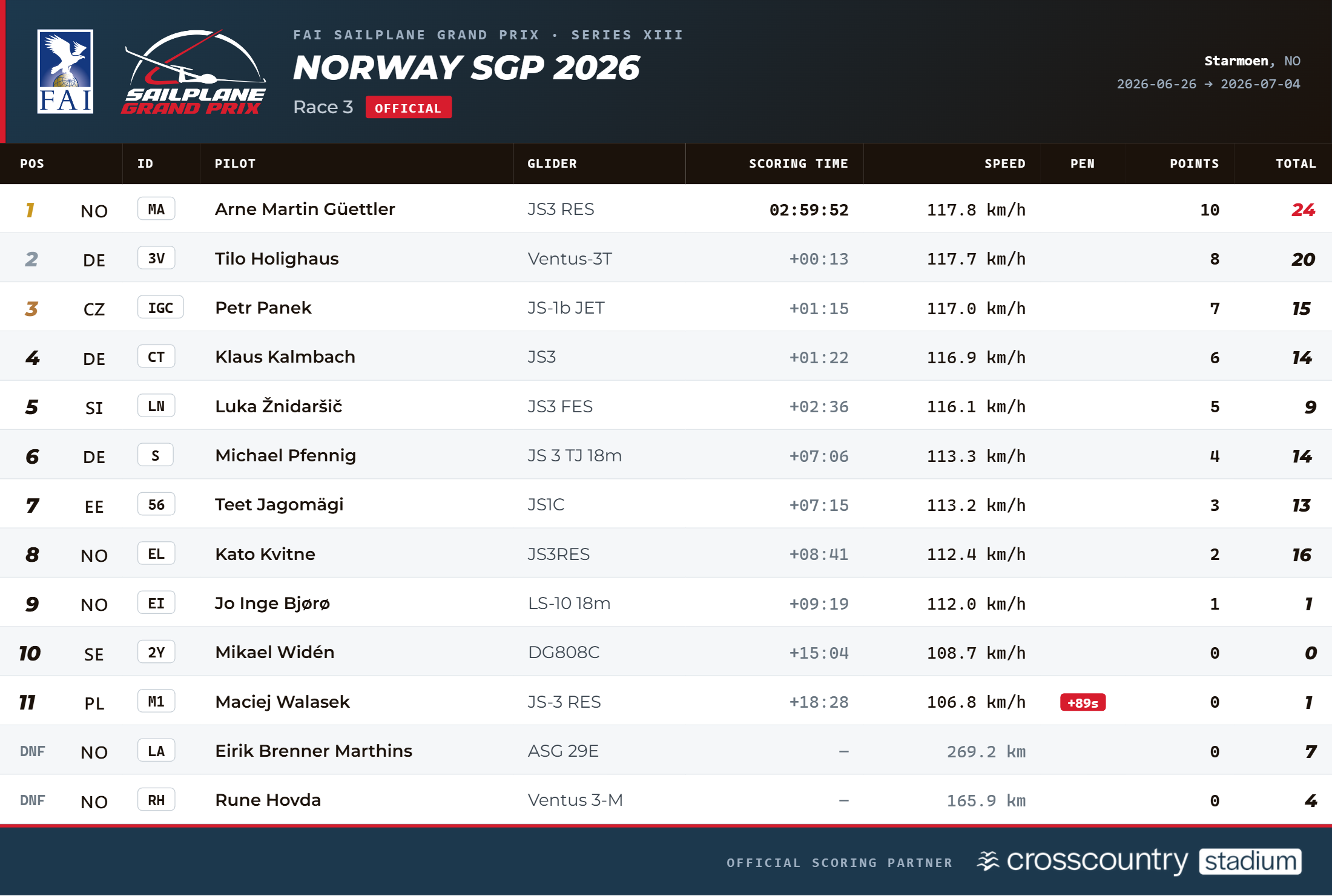
As the fleet prepares for the next racing day, the fight at the top of the leaderboard is only growing more intense. Comprehensive scoring and live stream playbacks can be accessed through the official tracking gateway at sgp.aero/results.